We departed Colombo on a journey through the heart of Sri Lanka — the island’s storied ‘Cultural Triangle‘ – to explore cultural icons (Temples), discover new villas (Treasures), take time off (Tranquility) and meet the warm souls who make this region so captivating.
The area – encompassing Kandy, Dambulla, Sigiriya, Polonnaruwa and Anuradhapura – is the cradle of ancient kingdoms and a living museum of Buddhist heritage.

Kandy – City of Kings and Sacred Relics
We began in Kandy, the last royal capital of Sri Lanka and still the island’s spiritual heartbeat. Over two days we explored hidden retreats tucked amid mist-shrouded hills, villas dotting the lakes that encircle the outskirts of Kandy and elegant colonial mansions.
No visit to Kandy is complete without visiting the Temple of the Sacred Tooth Relic (Sri Dalada Maligawa), one of Buddhism’s most revered sites. The golden-roofed temple houses a relic believed to be the Buddha’s tooth, enshrined within a series of jewelled caskets. We watched worshippers dressed in white, their arms filled with lotus blooms, as the rhythmic beat of traditional drums echoed through the halls – a moment of living faith amid centuries-old ritual.


Dambulla – Painted in Faith and Silence
From Kandy we drove north to Dambulla, home to the island’s most spectacular cave temple complex: Rangiri Dambulla Cave Temple. Guidebooks suggest visiting early or late to avoid the heat, but we arrived right at noon – and found the timing quite agreeable. The uphill walk was mercifully shaded by banyan and frangipani and when we reached the top we realised we had this UNESCO World Heritage Site almost to ourselves. Talk about accidentally discovering an amazing #travelhack!
Inside, the five sanctuaries carved into the rock revealed walls and ceilings covered with more than 150 statues and 2,000m² of murals depicting the life of the Buddha. Golden light flickered across ancient paintwork – a surreal, meditative experience made even more special by the hush of so few visitors. We invite you to watch a summary of our experience on Instagram:


Sigiriya – The Lion Rock Fortress
Next stop: Sigiriya, where we checked into a delightful boutique hotel with panoramic views of Lion Rock from the pool. We rose before dawn to climb the famous rock fortress: a 200-metre-high column of granite crowned by the ruins of King Kashyapa’s 5th-century palace.
Climbing at sunrise is essential: the steps and stairways cling to the western face of the rock, which bakes under the afternoon sun. In the cool morning light, the ascent was spectacular – past mirror-polished walls, the delicate Sigiriya frescoes, and finally the colossal lion’s paws that guard the summit. From the top, the jungle stretched endlessly, shimmering with morning mist evaporating with the rising sun. Gorgeous! Once again, we chronicled our adventure on Instagram:


Polonnaruwa – Ruins of a Golden Age
After a late breakfast we continued to Polonnaruwa, the third UNESCO treasure and the island’s second great capital. Here, scattered amid lakes and banyan trees, lie the stone remnants of a once-prosperous empire – Buddhist temples, royal palaces, bathing pavilions, and colossal reclining Buddha statues carved from granite.
We spent two hours exploring by foot, again struck by the serenity: no crowds, no noise, just the whisper of wind through ruins and the respectful nods of friendly locals. Amazing :)


Anuradhapura – The Sacred City We Missed
While our journey focused on Kandy, Dambulla, Sigiriya, and Polonnaruwa, no story of the Cultural Triangle is complete without Anuradhapura – the oldest and most sacred of Sri Lanka’s ancient capitals. Founded in the 4th century BC, this vast city was the spiritual and political heart of the island for over a thousand years.
At its centre stands the Sri Maha Bodhi tree, believed to be grown from a cutting of the original Bodhi tree under which the Buddha attained enlightenment – making it one of the world’s oldest living trees with a recorded history. Surrounding it are colossal dagobas (stupas) such as Ruwanwelisaya and Jetavanaramaya, once among the tallest monuments of the ancient world. Even from afar, travellers describe the scale of Anuradhapura as breathtaking – a city of stone and spirit, where time seems to pause.
Next time, we’ll be sure to dedicate a full day here – walking among monks in saffron robes, tracing the origins of Sri Lanka’s Buddhist legacy, and uncovering yet more villas that blend heritage with tranquillity.


A Cultural Triangle Like No Other
Across all three sites, the quietness was almost unbelievable. Even the hawkers were polite and low-key – a refreshing change from other heritage destinations where tourism can overwhelm the spirit of place. Here, you feel a genuine connection to the past and to the people who continue to live among it.
Sri Lanka’s Cultural Triangle is a rare blend of culture, calm, and authenticity – where history feels alive yet unhurried. From sacred temples to sun-drenched shores, it’s a journey that lingers long after the road ends.


East Coast – Rest and Recuperate
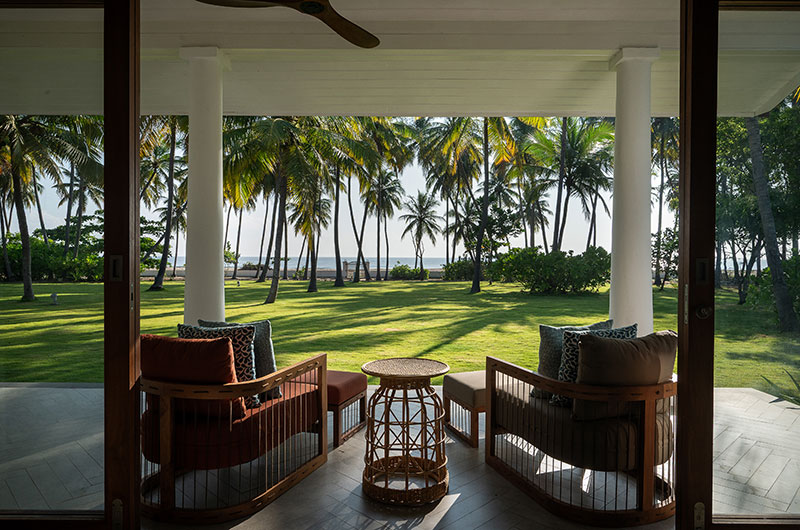
With our phones full of footage and hearts full of admiration, we drove east toward the remote eastern coastline and stayed at Kalkudah Beach House – a dreamy white villa sitting among coconut trees, on an empty beach, with slow island rhythms. It was the perfect place to rest, reflect and write this story!
From the ancient plains of the Cultural Triangle, we’re now heading for the hills, tracing winding roads into Sri Lanka’s lush interior. The air turns cooler, the landscapes greener and tea plantations stretch as far as the eye can see. Join us as we continue our journey to Ella and Nuwara Eliya, where misty mornings, colonial charm and hill-country villas await.