Vibrant Beauty of Sri Lanka
Sri Lanka’s beaches certainly live up to their dreamy reputation. These sandy stretches are just as stunning as the stories and social media posts suggest. It also doesn’t hurt that you can find jaw-dropping beachfront villas at a fraction of what you’d pay in, say, Thailand.
But what if we told you there’s more to Sri Lanka than simply its sublime shoreline?
When you look beyond its beguiling beaches, the Pearl of the Indian Ocean offers incredibly vibrant culture and rich history that’ll send your imagination soaring. Exploring Sri Lanka is both thrillingly exciting and blissfully relaxing. You basically get to feel like Indiana Jones – minus the snake pits and wayward boulders.
Be inspired by the most fascinating cities and enchanting landmarks in Sri Lanka.
The Hubs
Leaving the coast behind and heading inland, there are three major hubs to visit: Ella, Nuwara Eliya and Kandy.
Ella, the southernmost of the trio, is quite an established town perched about 1,000 metres above sea level. Thanks to its elevation, the town has a temperate climate which can feel like a relief after the heat of the lowlands. Ella is surrounded by tropical forest and tea plantations which make for a very beautiful backdrop.
Located about 60 kilometres northwest from Ella, Nuwara Eliya was founded by British explorer Samuel Baker in 1846. Often described as Little England, Nuwara Eliya became a major area for tea production and a popular refuge for British expats wanting to escape the tropical climate. With an altitude of over 1,600 metres, Nuwara Eliya is one of the coolest areas in the country. Nowadays, Nuwara Eliya is emerging as a hotspot among young influencers and entrepreneurs wanting to invest in experiential travel.
Compared to the other two, Kandy has a very different feel to it. While Ella and Nuwara Eliya are lush and green, Kandy is a busy hub filled with the sights and sounds of the city. Founded in the 14th century, Kandy was the last capital of the Sinhalese monarchy which ruled the country until 1815.


Iconic Train Ride
Even if you’re not drawn to the city itself, there is one compelling reason to visit Kandy: this is the starting point for one of the most beautiful train rides in the world. We know you’ve seen the images: a traveller leaning out of a blue train, gazing over lush tea fields rolling out in the distance. That pretty blue train runs from Kandy to Ella, with a travel time of around seven hours.
Besides those amazing views, this ride is well worth it for the ambiance alone. The train is usually packed with visitors and locals alike, with vendors roaming the carriages selling scrumptious local snacks. It’s also a piece of living history as the rail lines were originally built by the British to transport coffee (and later tea) from the highlands to the capital. We would definitely rank this train ride as a must in Sri Lanka – it’s just the most scenic adventure you can imagine.

Tea Trails
While the Sri Lankan landscape is now characterised by those lush tea fields, it wasn’t always this way. Back in the day, Sri Lankan farms were mainly focused on growing coffee. This all changed in the 1860s when a disease destroyed the country’s coffee crops. Scotsman James Taylor then began growing tea at the Loolkandura Tea Estate – the first tea plantation in Sri Lanka.
Today, hiking through the tea fields is a window to the country’s past and present, as Sri Lanka remains the fourth largest producer of tea in the world. Many of the tea plantations are open to visitors, with the most famous estates all located in the central highlands. Kadugannawa, Halpewatte and Pedro are among the most famous tea estates in the country.
Another immersive way to experience the tea trails is hiking the Pekoe Trail. This newly established hiking trail covers some 300 kilometres in the central highlands. This is an amazing way to experience Sri Lanka’s lush landscape, with footpaths established in the 19th century weaving between tea fields, tropical forest, sleepy villages and sacred temples.

Cultural Triangle
Sri Lanka is dotted with ancient temples and UNESCO World Heritage Sites. The highest concentration of these can be found in the Cultural Triangle. Once known as the Land of Kings, this area is located in central Sri Lanka. The ancient cities of Anuradhapura, Polonnaruwa and Kandy make up the three points of the triangle, with Dambulla and Sigiriya located inside its perimeter.
Anuradhapura was a thriving city for 1,300 years until it was invaded and largely abandoned in 993. Much like the ancient ruins of Angkor, the city lay hidden in the jungle for centuries until it was rediscovered in the 19th century. Today, Anuradhapura offers a fascinating window into Sri Lanka’s ancient past, with numerous monuments surviving to this day. The area is large and feels like an extensive park with greenery abound. You can explore Anuradhapura on a bicycle, on the back of a tuk-tuk or by hiring a car and driver.
After Anuradhapura, Polonnaruwa emerged as the new capital. Polonnaruwa features beautifully preserved ruins dating back to the 10-12th centuries, including impressive Brahmanic monuments and the ruins of a garden-city created by King Parakramabahu I. Again, you can explore this large area by bicycle, car or tuk-tuk.

The Sacred City of Kandy is the third point of the Cultural Triangle. The city reigned as the last capital of the Sinhala kings, its glory days reaching from 1469 to 1818. Beneath its hectic modern pace, Kandy is steeped in rich history. The most famous landmark is the Temple of the Tooth which is thought to house the relic of the tooth of the Buddha. The temple dates back to the 17th century and is among the most revered sites in Sri Lanka.
The landmarks that sit inside the triangle are the Dambulla cave temple and the Sigiriya rock fortress. Dating all the way back to the first century BCE, Dambulla is the most well-preserved ancient landmark in Sri Lanka. Sigiriya on the other hand is home to the Lion Rock – a staggering 200-metre-tall rock formation which once housed a palace on its apex. It’s a 1,200 step climb to reach the top of this formidable fortress which is surrounded by lush greenery and the remains of the royal garden.

National Parks
While those picture-perfect beaches have certainly become Sri Lanka’s most prominent calling card, the country’s natural beauty is by no means limited to just sea, sand and sun. Sri Lanka’s 26 national parks are teeming with exotic wildlife and luscious flora.
Yala and Udawalawe are the most famous national parks in the country. In Yala, elephant, buffalo and crocodile sightings are pretty much guaranteed, and you might even glimpse the more elusive leopard. Udawalawe, on the other hand, is famed for its elephant population – some say elephant watching at Udawalawe is even better than East Africa. If Yala and Udawalawe feel a little busy, consider adding more under the radar parks like Kumana or Wasgamuwa to your itinerary.


Architecture
From tea trails to tropical beaches and from mighty mountains to lazy rivers, Sri Lanka’s natural landscape is thrillingly varied. The same can be said of the country’s architecture which covers everything from ancient cave temples to cutting edge skyscrapers.
The most notable name in Sri Lankan architecture is Geoffrey Bawa (1919-2003) whose interpretation of tropical modernism has left an enduring mark on the country’s architectural landscape. Lunuganga, Bawa’s country house in Bentota, and Number 11, his residence in Colombo, have become pilgrimage sites for devout fans. You can also take things further and actually stay in a Bawa designed property – we love Claughton House in Dickwella.
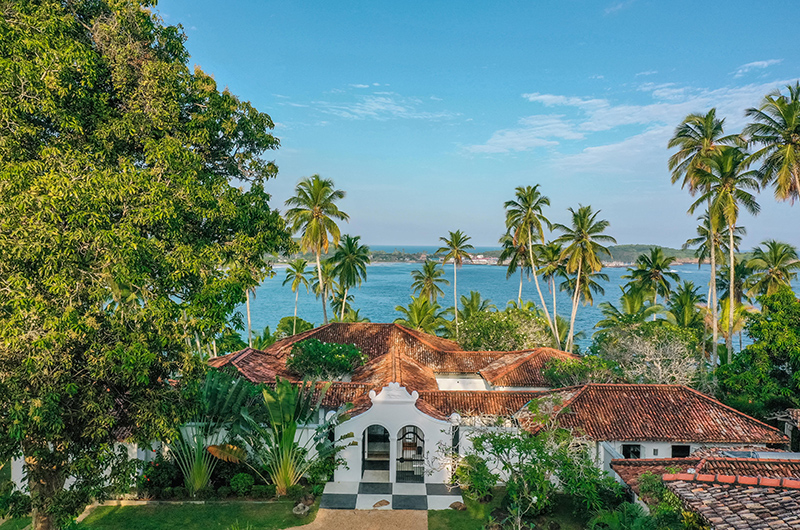
A stroll through Galle Fort offers another fascinating window into Sri Lankan architecture. Dating back to the 16th century, the fort was originally built by the Portuguese and later fortified by the Dutch. This charming enclave still maintains its architectural integrity with many of the buildings dating back hundreds of years. One of the highlights is Thambili House, a 300-year-old mansion which has found a new lease on life as an exclusive luxury villa.

The cobblestone streets of Galle are in stark contrast with the sleek skyscrapers of Colombo. Beira Lake offers the best vantage point for admiring the capital’s tallest and most striking buildings, including One Galle Face and the Lotus Tower

How to Sample the Best of Sri Lanka in a Single Trip
There are a few different routes you can take if you’re looking to experience Sri Lanka’s rich heritage, culture and nature to the fullest. We’ll first introduce two alternative routes and then share the one we’ve always followed.
Option 1: Culture and Adventure
If you want to escape the crowds and have an Indiana Jones-style adventure exploring ancient ruins (but don’t require a trip to the beach), you can simply head inland from Colombo and set your course for the Cultural Triangle. The drive from Bandaranaike International Airport to Kandy takes about three hours.
Option 2: The Full Tour
If you want to accomplish the whole trifecta – culture, nature and beach – you can again start by heading inland from the capital and enjoy the ancient sites and tea fields to the fullest. You can then perhaps add a national park to your itinerary before finishing things off with a beach trip, and then head back up the coast to Colombo.
Option 3: Our Tried and Tested Favourite
We’ve been to Sri Lanka many times and this route has proven to be our favourite. After landing in Colombo, we first head south to decompress along the beach. Each beach has its own unique flavour, so we tend to switch things up. Sometimes we’ll stay in buzzy Unawatuna, other times we’ll soak up the vibes in Hiriketiya, or we’ll drive all the way to dreamy Tangalle. After we’ve had our fix of sea, sand and sun, we then head inland to have our adventures on the way out. This little loop gives you a taste of the best of Sri Lanka.
If you plan to do the full tour from Colombo to the beach and then inland, we recommend spending at least 10-14 days in Sri Lanka. This will give you enough time to take it all in and enjoy the experience to the fullest.

Visiting Sri Lanka is the adventure of a lifetime. Be inspired by our Sri Lanka travel guide or explore our hand-selected villas in Sri Lanka. We have personally inspected every villa and have stayed in many of them, so feel free to reach out with any questions you may have – contact us here.