Once upon a time, the term luxury generally referred to very tangible things – think designer bags and luxury cars. In travel too, emphasis was placed on the tactile things. You could only label a hotel five stars if the bed was draped in Egyptian cotton, the table was set with the finest China and the bathroom was stocked with designer toiletries.
Sure, the effect was very luxurious – but room after room, it was the same. In fact, it was the same from hotel to hotel and indeed, from country to country. While those finer things have certainly not lost their lustre – who doesn’t love sinking into those butter soft hotel sheets? – there has been a noticeable shift. Travellers are now shunning the generic splendour of could-be-anywhere tourism and are instead gravitating toward experiences and accommodation that are bespoke and private.

Personalised, Bespoke Experiences
The term “experience economy” was coined by The Harvard Business Review in 1998. The term describes an evolution from consumers simply purchasing commodities to guests investing in experiences. Essentially, our culture is moving from owning to experiencing. Travellers too are looking beyond basic accommodation and package holidays and are instead seeking experiences that will truly enrichen their lives.
In a world where time and space have become the ultimate luxuries, travel is not about ticking items off a list a guidebook dictates you “should” do. Instead, it’s all about bespoke experiences that are tailored to you. Experiential travel has become the hallmark of luxury travel while luxury itself has become very subjective.
For some, the perfect luxury getaway might be an action-packed adventure filled with scuba diving, jungle treks and sky diving in stunning remote locations. For others, it could be a week at a beautiful private villa where you and your family get to enjoy each other and perhaps learn about the local communities. One thing’s for sure: The one size fits all package holidays of yore simply won’t do.
Privacy & Security
Sharing your domain with strangers has never been a part of the elite’s MO. Private villas are thought to have been around since Ancient Rome and throughout the centuries, they have held their appeal with the glitterati.
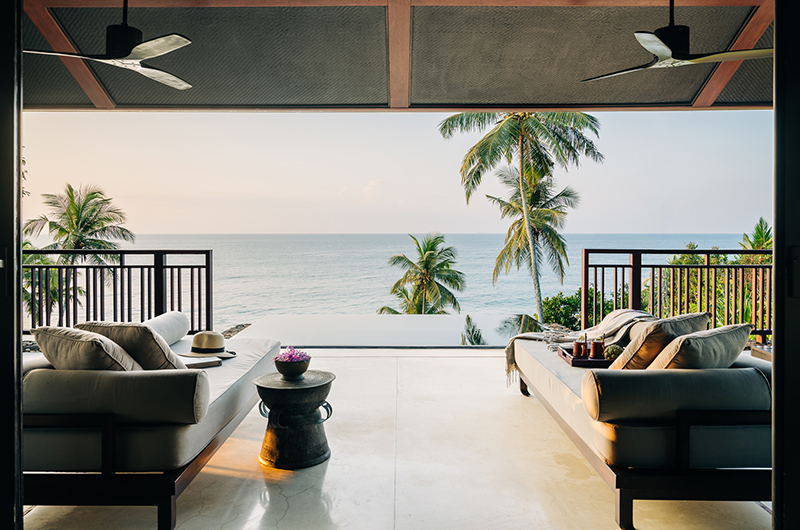
Staying in a private villa means you can come and go as you please, dress just the way you like and overall, have the place all to yourself. The pandemic fuelled this preference for privacy even further. Travellers are now placing even more value on creating their own private bubble –one that ensures absolute privacy and security from the outside world.
The mega villas of today have 10 or so bedrooms, huge living areas, magnificent gardens and massive swimming pools. Having it all to yourself without the distractions and interruptions of everyday life allows you to focus on the people that matter the most. All your energies and attention can go to creating memories – instead of having to fight over sunbeds down at the crowded pool.

Blurred Lines Between Business & Pleasure
Travelling to exotic locales used to mean taking time off work which limited the number of days you could travel. The rise of remote work has changed all that, allowing for more flexible lifestyles and longer stays abroad.
Today, you could spend your mornings surfing on Canggu Beach and still be able to Zoom into that meeting in Hong Kong at noon. Luxury villas come with full time staff to make sure mealtimes and housekeeping run like clockwork; pools and media rooms to appease the kids; nannies to look after the little ones; and spas, gyms, bars and boxing rings to keep the grownups entertained – even when one of you has to squeeze in a meeting.
This shift in travellers’ lifestyles is also reflected in the way luxury accommodation is now designed. Gone are the days when we’d lament over the slow internet in beautiful beach houses, as fast and reliable WIFI is now a standard feature in all luxury villas. More and more villas also have fabulous workspaces – would you rather clear your inbox with a side of jungle views or mountain panoramas?

Technology Opens up the World… But it’s Not a Silver Bullet
While most of us travel to rack up those unforgettable offline experiences – a private safari in Sri Lanka or a temple visit in Bali – we can’t underestimate the role technology has played and continues to play in the way we travel.
Back in the day, it used to be that you had to contact a trusted travel agent or a friend in the know to scout out the best places to visit. The internet allows everyone and anyone to research locations, accommodations and experiences we would likely never have been exposed to pre-internet. In many ways, the world has never been more open.
However, having access to all this information and inspiration becomes meaningless without trust. In today’s online landscape, fake reviews, inaccurate photos and misleading descriptions run rampant. In 2022 alone, Google reportedly blocked or removed 115 million fake reviews of hotels, restaurants and businesses. At the same time, the most dominant booking platforms have essentially stripped all service and as a result, travel has become very DIY – the antithesis of luxury. Vetting properties and cross checking reviews can feel like a full-time job. Being able to talk to an actual human being and to verify that the property you’re booking is as advertised is becoming a luxury.

Generational Shift
The way we travel and who we travel with has changed and the luxury travel market has had to react. It’s something we noticed in the Maldives – the ultimate luxury destination – as early as 2016:
“Honeymooners are returning to the Maldives years later with young families, large families are planning multi-generation vacations together, and young people are travelling more and more with friends. The Maldives needs larger villas to cater to larger groups.”
This same trend is now visible across the market. The villas have gotten bigger with plenty of bedrooms and five-star facilities that allow guests of every and every age to have a great time under the same roof. These include bunk beds, playrooms, media rooms, games rooms, pools, vast lawns and so much more.
Beyond the family unit, there’s also a wider generational shift that’s taking place. While baby boomers currently have the most spending power and millennials represent the largest consumer group, the role of Gen Z is growing rapidly, both financially and culturally. With Gen Z prioritising “lived experiences and a quest for meaning”, experiential travel is set to become an even stronger trend moving forward.

Authenticity Above All
Travellers’ desire for authentic experiences speaks to both our past and our present. On the one hand, craving genuine experiences and real encounters is a counterreaction to the package holidays of yore. No one wants to visit another tourist trap, and no one wants to follow the trodden tourist trail. Instead, travellers want to experience the local culture firsthand and immerse themselves in something new and yes, real.
At the same time, this quest for authenticity is also in contrast to our increasingly online lives. As we find ourselves navigating a jungle of AI and deep fakes, we want something that’s real and tangible. The artifice of the digital world only increases the value of human connections and authentic, once-in-a-lifetime experiences. Authenticity truly is a luxury that never goes out of style.