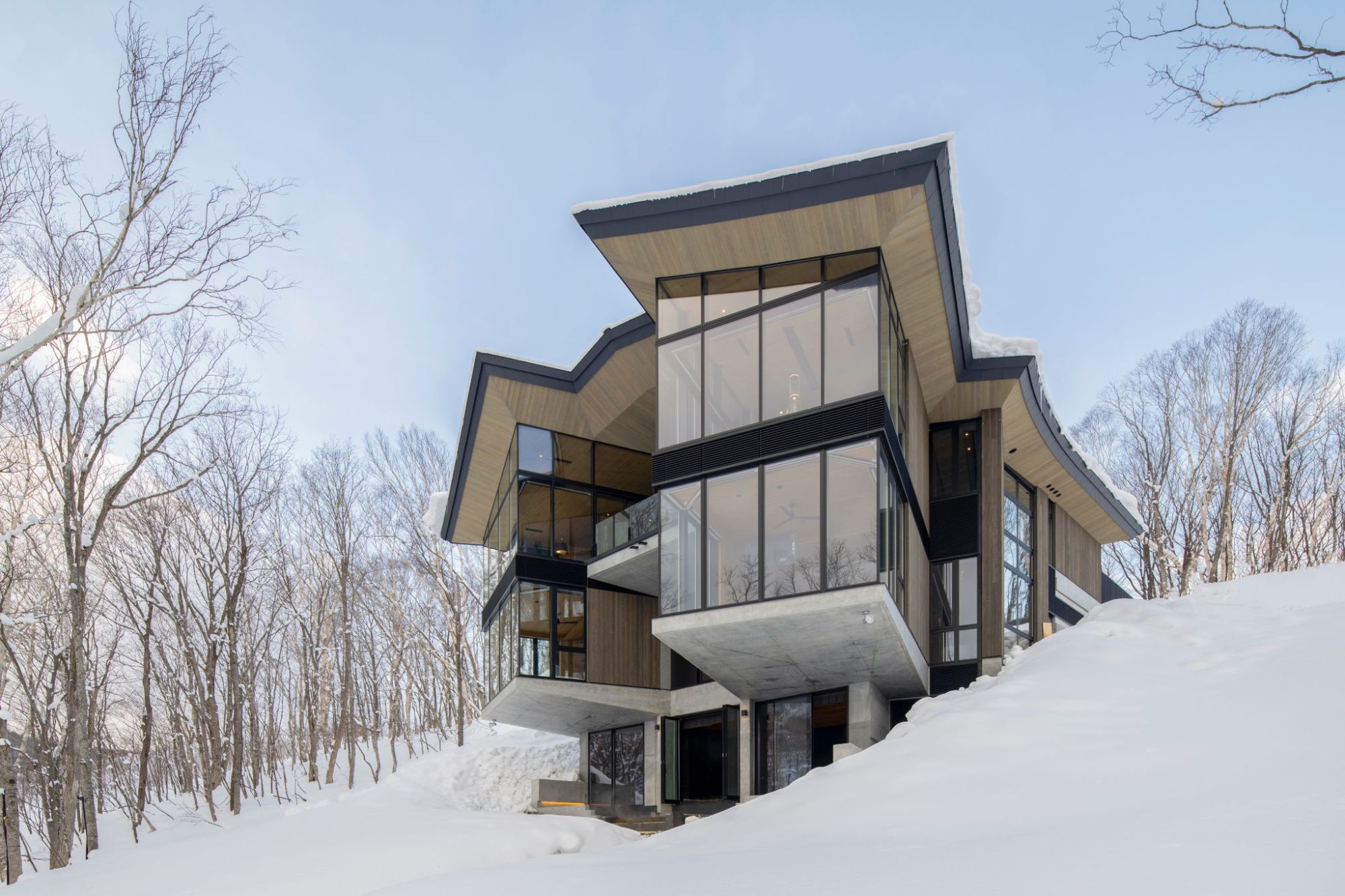

Niseko has come a long way…
What was once a sleepy and secluded ski town has transformed into a global powder mecca favoured by the jet set. We have been operating in Niseko for well over a decade and it has been fascinating to witness the area’s transformation over the years. Here, we explore the ever-evolving architecture in this powder paradise.
True to Its Roots
Niseko first began to attract skiers in the early 1900s, and the first ski lifts were installed in the 1960s. In those early days, skiers would typically seek lodging in family-owned bed and breakfasts. While the area has certainly changed, traces of the old Niseko are still woven into the local landscape.
In Hirafu Village, heritage buildings like Greystone are now neighboured by cutting-edge modern structures, creating a fascinating contrast between the old and the new. In fact, Greystone can be seen as a metaphor for Niseko’s wider evolution.
This timber structure was one of the original pensions that welcomed skiers into Niseko. Since then, it has gone through major updates to become a huge private chalet spanning nearly 500m², fitted with all the modern necessities and comforts. Happily, much of the original structures have been preserved, including the two large, onsen style baths on the basement level – these were once the inn’s communal female and male bathrooms. Private onsens and Japanese baths have since become a standard feature in newly built luxury chalets. The natural indoor/outdoor onsen in Panorama Niseko are particularly impressive.
This mix of traditional elements with more modern designs has become one of the overarching themes in Niseko architecture.
Bold Designs & Japanese Touches
Converting Greystone from a communal lodge to a massive private chalet speaks to a wider trend in Niseko: over the years, the chalets have grown bigger and bolder. On the surface, many of these million-dollar structures would look right at home in Aspen or St. Moritz, but just like Greystone, they still incorporate Japanese elements into their design.
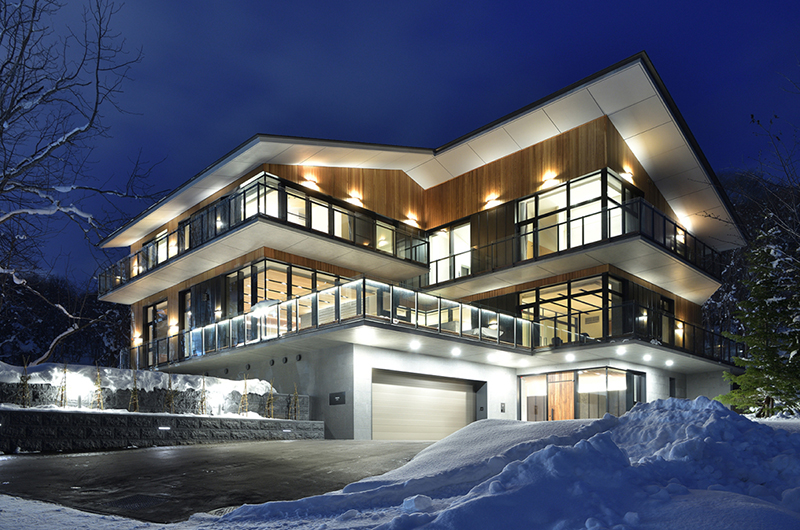
At nearly 800 square metres, Tsudoi is one of the most lavish chalets in Niseko. This mega mansion features all the mod cons you’d expect from a modern holiday home: a state-of-the-art media room, private gym, and huge living areas. (Fittingly, Tsudoi loosely translates into “a friendly gathering”). But Tsudoi also adds elements that are unmistakably Japanese.
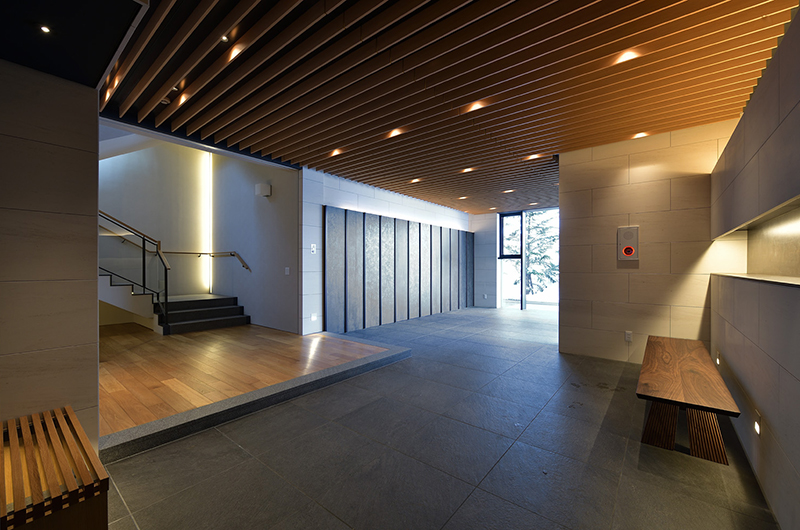
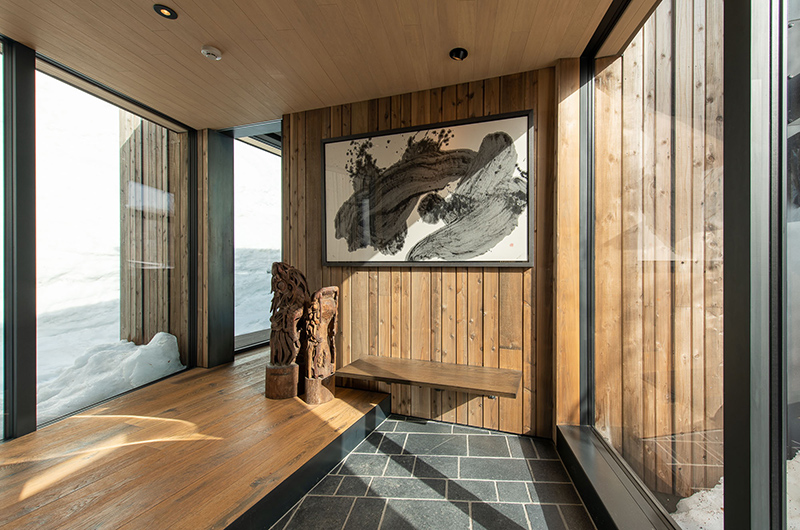
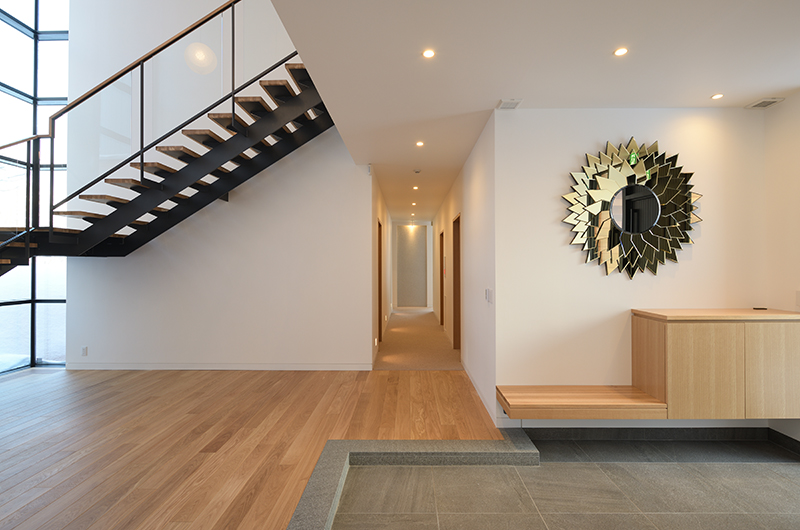
Guests step inside Tsudoi through a genkan, an integral part of Japanese homes. It’s a recessed entryway positioned directly in front of the main door, typically a bit lower than the building’s main floor. This transitional space between the outside world and the home is where you remove your shoes – wearing shoes indoors is considered impolite and unclean in Japanese culture. You will find a genkan in practically every chalet in Niseko, no matter how avant-garde or westernised their design might otherwise be.
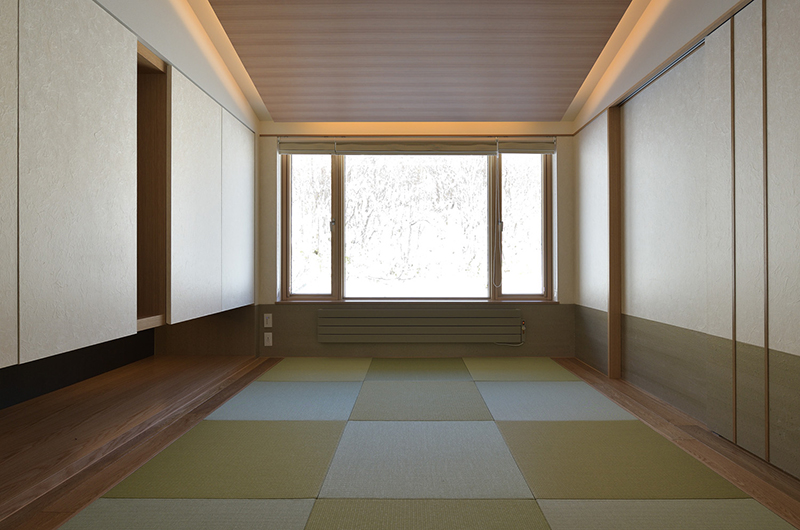
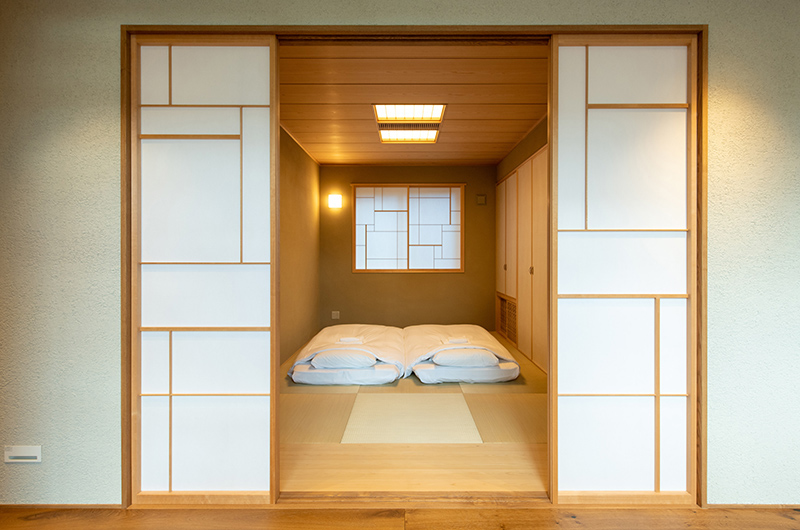
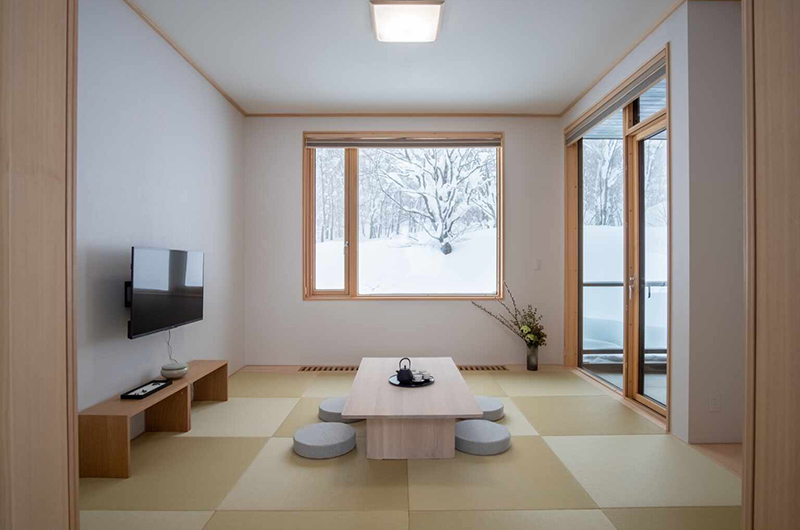
Another unmistakably Japanese feature in Tsudoi is the chalet’s tranquil tatami room or washitsu. This room features traditional tatami flooring made from rice straw. Tatami rooms are highly adaptable with futon mattresses laid on the floor in the evenings and then folded away again in the morning. That chalets like Tsudoi, Song Saa, and Zai-On only have one tatami room is reflective of the times. Back in the day, most rooms in a Japanese home would be in washitsu style but today, many homes only feature the one tatami room as a nod to the past and Japanese culture.
Conversation Between East and West
Traditional Japanese elements incorporated into otherwise modern structures point to another defining characteristic of Niseko architecture: an ever-evolving conversation between East and West. This is reflective of Japanese architecture and culture by large.
After having been isolated from the outside world for nearly three centuries, Japan began to open up at the end of the 19th century and started to absorb cultural influences from the west. As a part of Japan’s modernisation, foreign architects and engineers were invited to manage construction projects. Since then, Japanese architecture has been in constant conversation with Western approaches, with influences flowing back and forth.
A high gabled roof has long been a hallmark of classic European chalets. These triangular silhouettes with their pronounced eaves now pierce the Niseko skyline in chalets like Akatsuki, Shirakaba and Ginkyo. Besides adding a pleasing appearance, a pitched roof protects the building during winter as it keeps snow from piling up. This comes in handy as Niseko receives, on average, 15 metres of snow every winter.
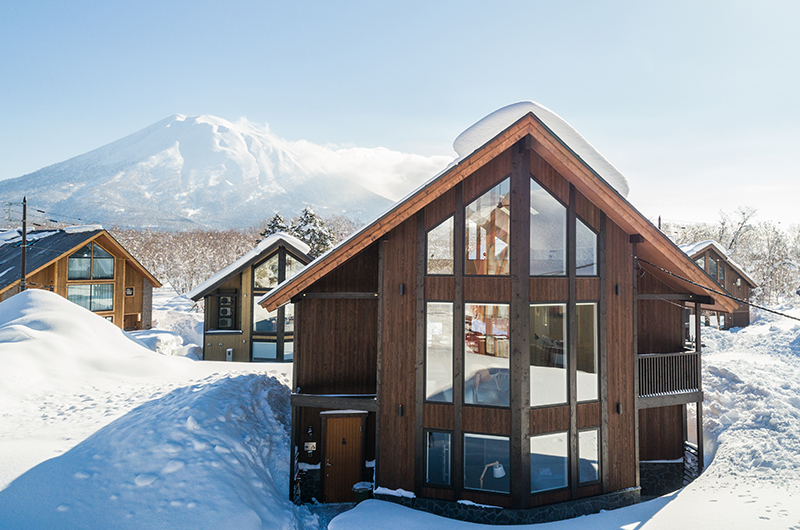
Besides its silhouette, Akatsuki has quite literally brought in influences from classic European chalets. The chalet was built and furnished using materials imported from Europe, including solid oak flooring from France – a choice inspired by the winters the owners had spent skiing in the French Alps. The chalet also features old timber rescued from a local Niseko onsen that was demolished in 2012. The mix of these two timbers is a beautiful metaphor for Niseko’s dance between East and West.

Concrete Creations & Metabolist Marvels
Besides wooden chalets, grand concrete structures are also ubiquitous in Niseko – but it wasn’t always this way. Traditionally, Japanese architecture relied on wood as the main building material. This began to change during the early 1900s when steel-reinforced concrete was introduced into the vernacular.
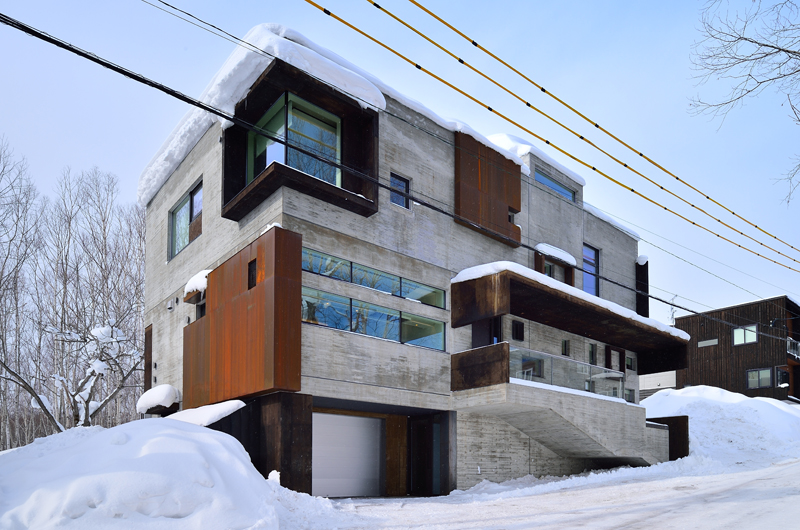
In Niseko, you’ll find traditional timber structures neighboured by modern concrete mansions. These bold, brutalist chalets (including Yuki Uchi and Asobidokoro) call to mind concrete masterpieces like Azuma House and 4×4 House by Pritzker Prize winning architect Tadao Ando.
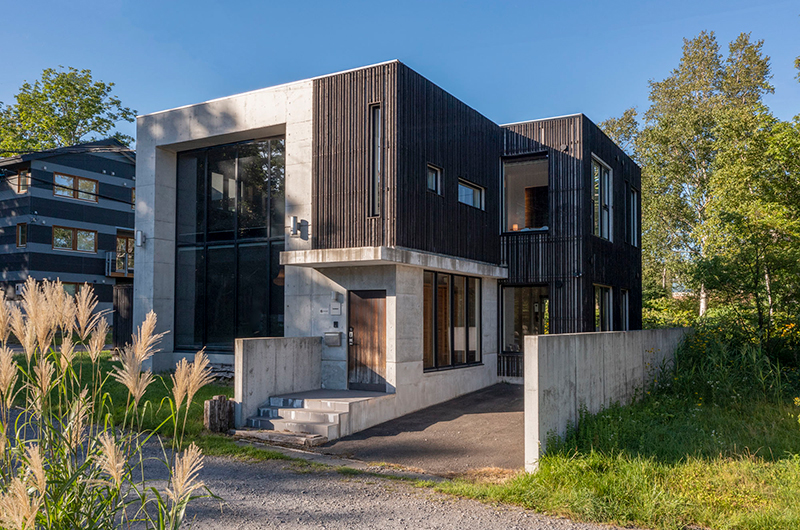
The spirit of Kenzō Tange, one of the most influential architects of the past century, can also be felt in Niseko. Tange was one of the most visible proponents of the metabolist movement which emphasised a structure’s ability to adapt to the fast-paced changes of the post-war world. Flexible and modular structures are hallmarks of metabolist architecture, its most iconic iteration being the now demolished Nakagin Capsule Tower.
Echoes of the same approach can be seen in the stacked silhouettes of Boheme and Millesime, both designed by award winning architect Makoto Nakayama. (Nakayama also designed the fabulous Nivia chalet in Hakuba). A similar silhouette can also be seen in the Niseko Town Hall.
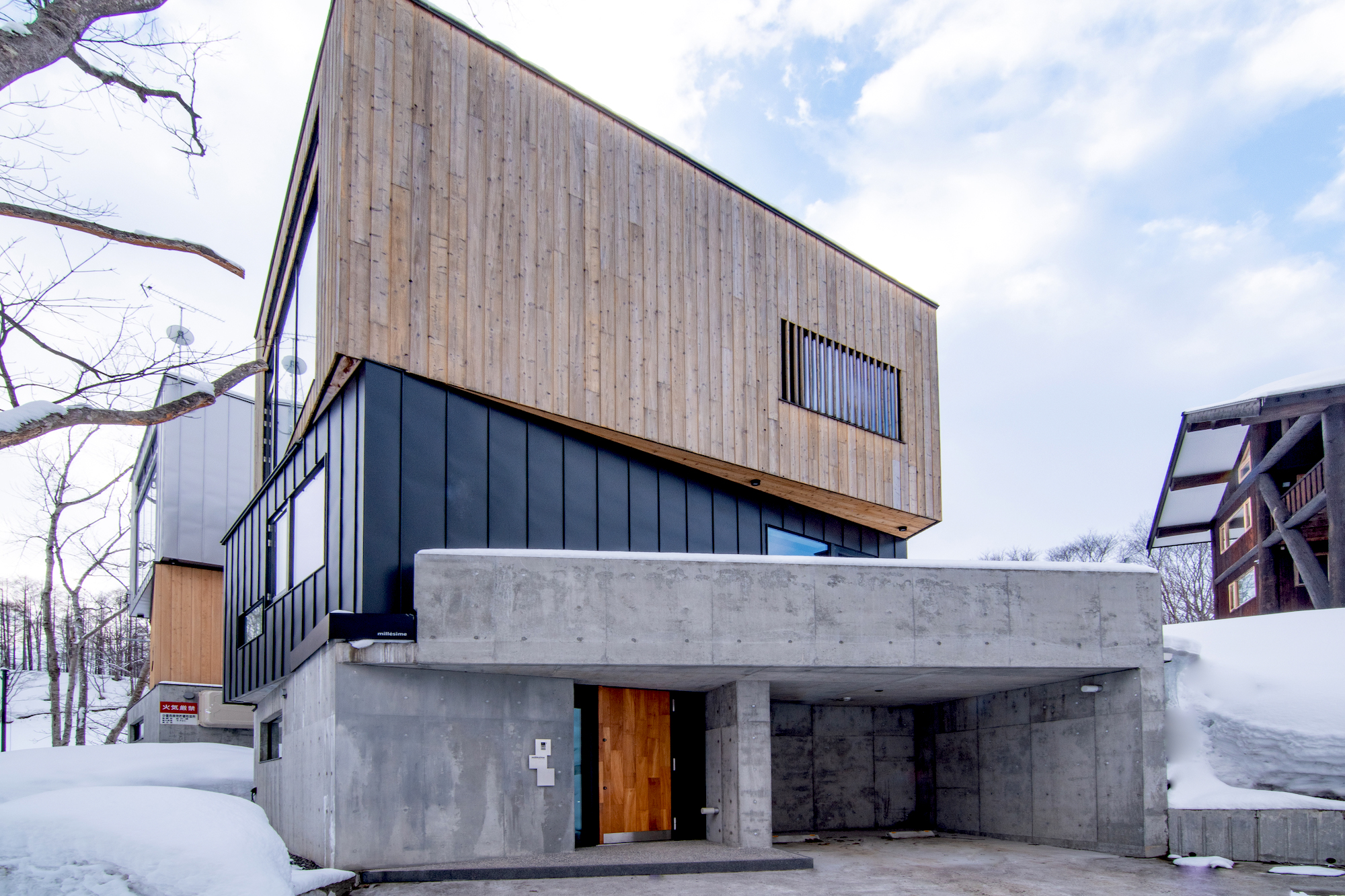
Mukashi Mukashi is another creation by the visionary Nakayama. The name of this brutally beautiful chalet means “once upon a time in” Japanese. The whimsical moniker calls to mind the concept of ihyou which refers to something surprising or unexpected – a key component of contemporary Japanese architecture.
In Mukashi Mukashi, the use of materials feels bold and idiosyncratic: the blocky façade contrasts raw concrete and weathering steel with stretches of full wall glass. Beautiful idiosyncrasies are everywhere in Niseko architecture: the subtly tilted roof in Ro-An, the artfully “uneven” silhouette of Shakuzen, the impenetrable façade of Iori Niseko.
Manmade Meets Nature
Over the years, Niseko’s demographic has shifted from powder hounds travelling on a budget to high-net-worth visitors and expats drawn to the finer things in life. For both types of travellers, Niseko’s main draw remains the same: its majestic and unspoilt nature.
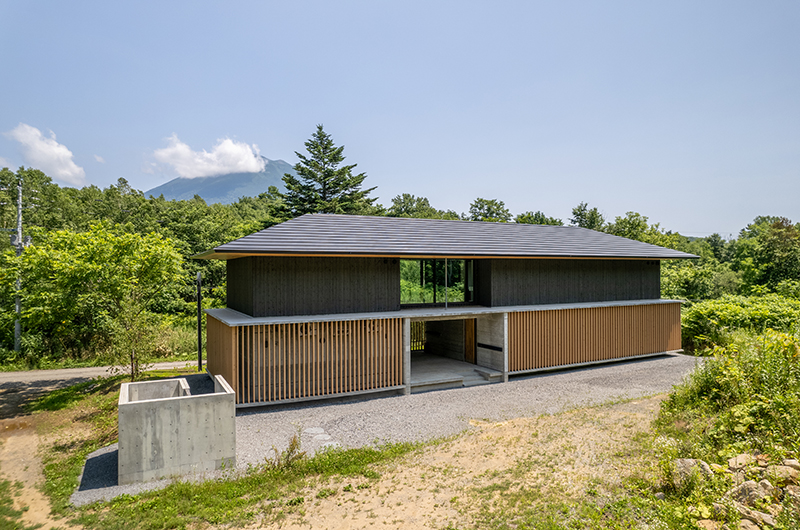
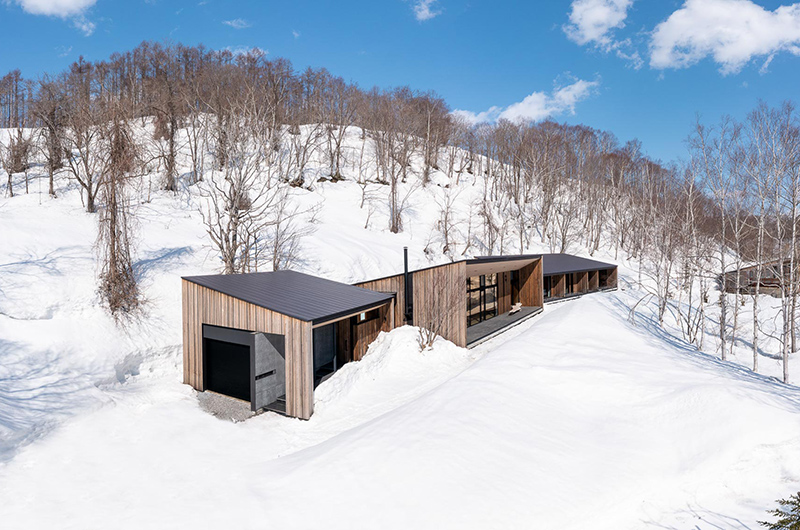
Japanese culture has always prioritised a deep connection with nature which is reflected in many elements of traditional architecture. Engawa, for example, refers to a covered deck – a transitional space between a building and its garden.
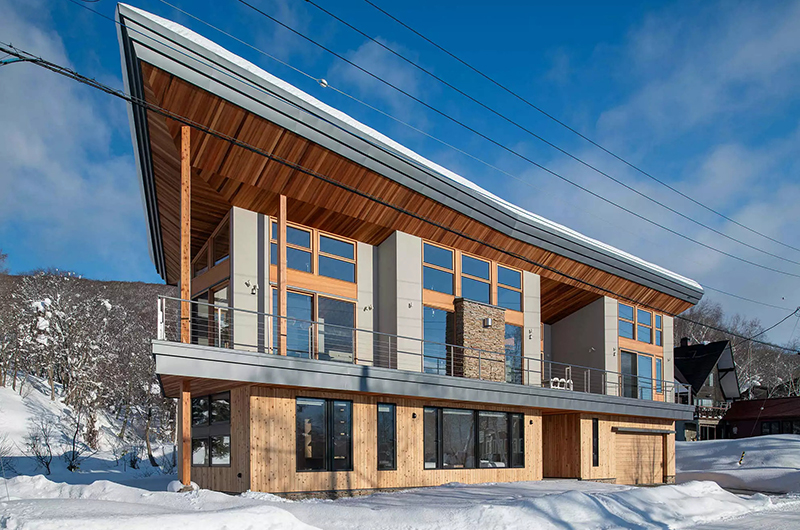
In Niseko, chalets like Gen Myo offer a contemporary take on this traditional Japanese element with an engawa style deck running the full length of this modern minimalist chalet. Full wall windows – a staple in chalets across Niseko – further enhance the feeling of being at one with nature.
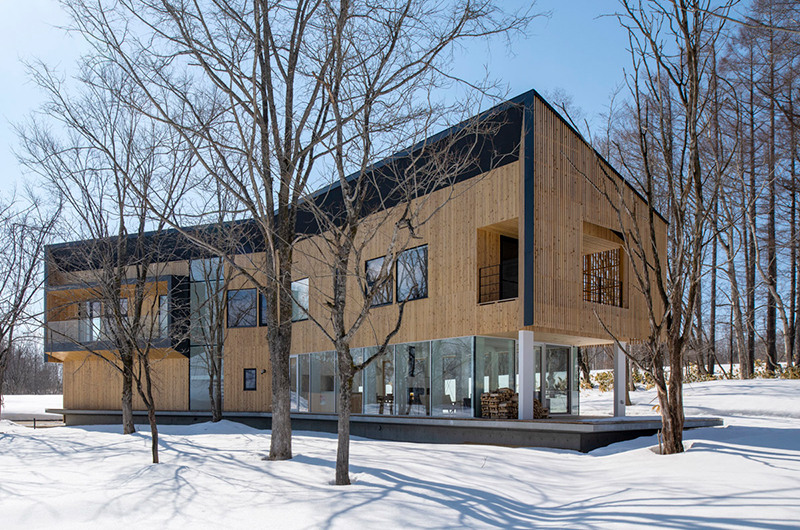
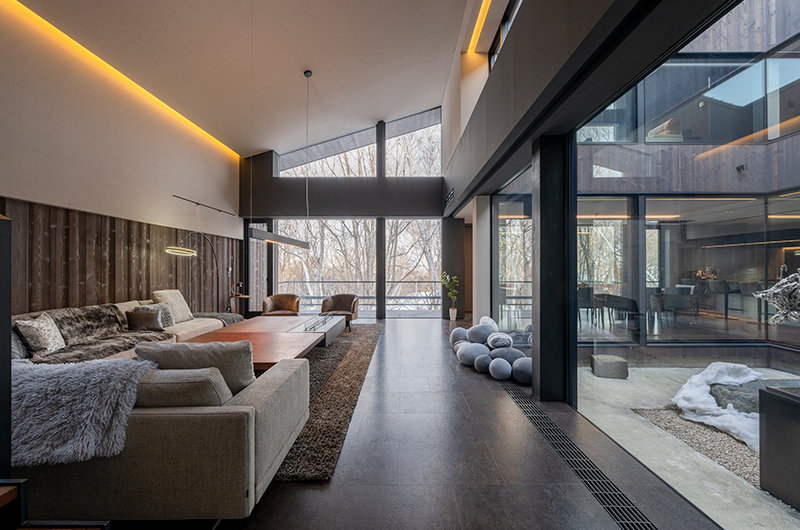
In Japan, windows don’t look out to natural views alone. Japanese gardens were traditionally meant to be organised and neat rather than wild and luscious, and they were meant to be observed rather than entered. This is exemplified in the glass encased stone “garden” which dominates the living areas in Meikeikyo Hanazono.
Playing the Long Game
Like in many emerging resort communities, development in Niseko has at times been very intense, and land prices have skyrocketed. All too often, this leads to over development – paving up paradise to put up a parking lot and building skyscrapers that block the views. Stakeholders are playing the long game to ensure this doesn’t happen in Niseko.
Riccardo Tossani has designed many of the most spectacular chalets in the area, including Kazahana Hanazono and Tsubasa Chalet. But his influence goes far beyond individual structures. Tossani also created the master plans for the Hanazono and Grand Hirafu resorts. He was also an early advocate for more sustainable development in the area.
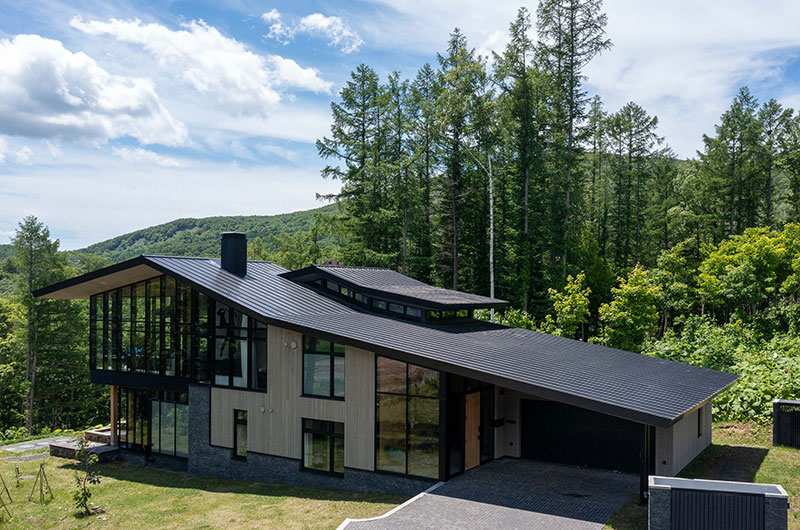
Tossani created the master plan for the Escarpment Estate, a trailblazing community of chalets in Lower Hirafu. This exclusive estate is characterised by mature trees and abundant native flora – and spectacular views of Mount Yotei. Thanks to underground power lines and utilities, those views are unobstructed now and will remain so in the future.
The estate is now home to some of the most exclusive chalets in Niseko, including one built by Chalerm Yoovidhya. The chalets’ sleek minimalist contours (as seen in Escarpment House, Hibari and Puffin) ensure that the spectacular natural scenery will always have top billing.
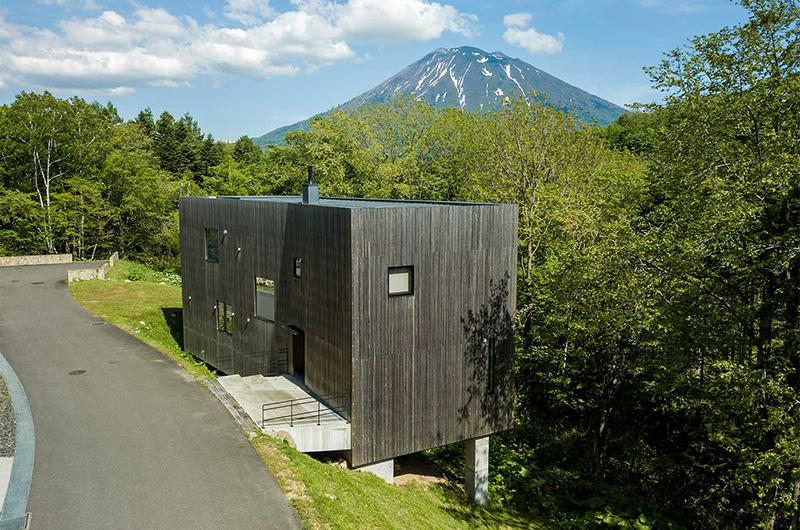
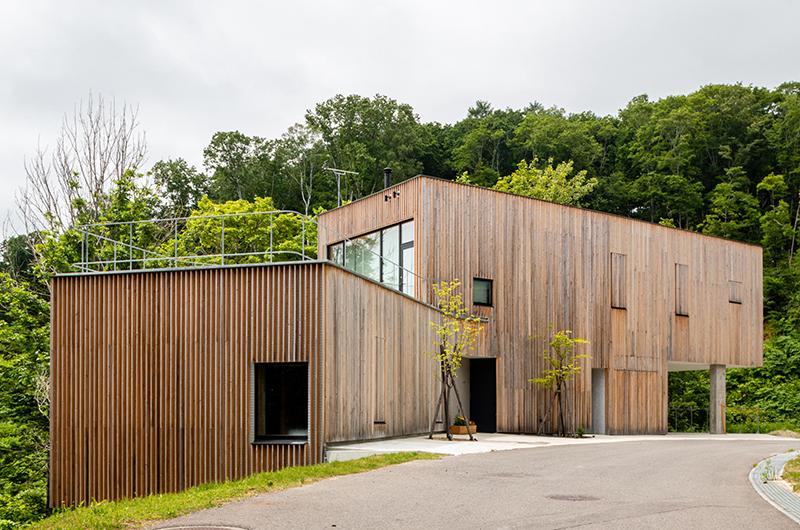

A similar, luxury-in-nature approach has been adopted at the Elevation Estate which was designed by Kengo Kuma, Japan’s preeminent architect. Built on a prime location in Upper Hirafu, Elevation takes full advantage of its natural surroundings with meticulous guidelines in place to help protect the unique landscape. The chalets here (including the indomitable Tsudoi) are some of the biggest and boldest in Niseko, designed to ensure absolute privacy from the outside world.

These two estates perfectly embody Niseko’s winning approach: unapologetically ambitious and lavishly luxurious, executed with the utmost respect to Japanese traditions and Hokkaido’s spectacular nature.